Tenancy at Will vs Periodic Tenancy in Singapore
Compare consent, recurring rental periods, termination notices and Singapore residential rental rules with RES exam examples.
ExamDecoded illustrated study guide
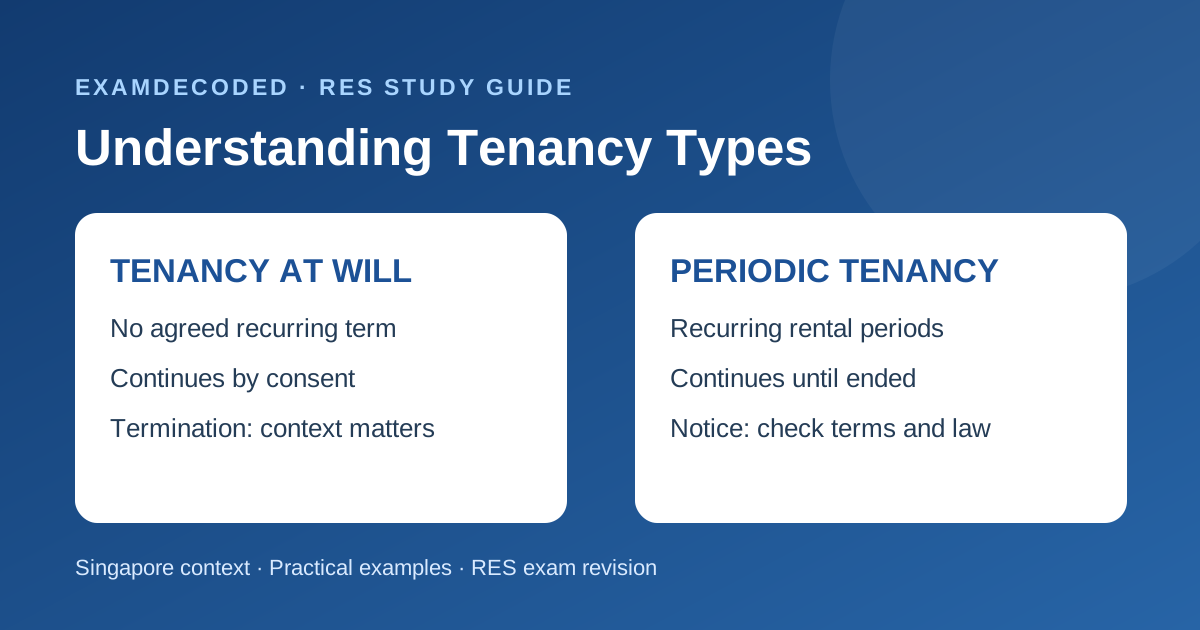
A tenancy at will continues by the parties’ consent without an agreed recurring rental period; a periodic tenancy continues from one rental period to the next until properly ended. A periodic tenancy is not the same as a fixed-term lease. For Singapore RES questions, examine the agreement, rent payment pattern, conduct and termination terms, then apply URA or HDB rental restrictions where relevant.
What is a tenancy at will?
A tenancy at will is an arrangement in which a person occupies property with the landlord’s consent, without a definite lease term or an agreed recurring tenancy period. It continues while the parties permit it. It may arise while parties are negotiating a formal lease, but the actual facts and their intentions matter.
Do not assume that “at will” always means instant eviction without any procedure. The contract, circumstances and applicable legal requirements matter; termination of permission is different from taking physical possession by force.
What is a periodic tenancy?
A periodic tenancy runs for recurring periods, such as month to month or year to year, and continues into the next period unless it is properly terminated. Its periodic nature may be expressly agreed or inferred from conduct, including rent payment and acceptance, depending on all the circumstances.
For example, after a one-year lease expires, the parties may continue with monthly rent accepted by the landlord. This may indicate a monthly periodic tenancy. It is not automatic: a holdover clause or other evidence may point to a different arrangement.
Tenancy at will vs periodic tenancy: comparison
| Feature | Tenancy at will | Periodic tenancy |
|---|---|---|
| Duration | No agreed fixed or recurring term; continues by consent. | Successive defined periods, e.g. monthly. |
| Continuation | Continues while the arrangement is permitted. | Continues into another period until properly terminated. |
| Rent | May be payable; payment alone does not conclusively determine the type. | Often aligned with the recurring period; look at all facts. |
| Termination | Can generally be brought to an end by either party, subject to agreement and applicable law. | Requires valid termination in accordance with agreed terms and applicable law. |
| Notice | Do not assume a universal 0-day rule. | Do not assume a universal 30-day rule; check the tenancy and legal context. |
| Formal written agreement | May exist without a formal lease document. | May be express or inferred; a signed new lease is not always necessary. |
Do not confuse periodic tenancy with a fixed-term lease
A fixed-term lease ordinarily specifies a beginning and an ending date, such as 1 January to 31 December. A periodic tenancy instead continues through successive periods until brought to an end. A monthly rent amount does not by itself turn a 12-month fixed-term lease into a monthly periodic tenancy.
Singapore-specific rental rules
Private residential property
URA requires occupants to fulfil a minimum stay of three consecutive months. Ordinary private homes cannot be used for daily or weekly short-term accommodation. This is a property-use rule, not a universal notice period for terminating a periodic tenancy.
HDB flats and bedrooms
HDB requires a minimum rental period of six months per application for flats and bedrooms. HDB approval, tenant eligibility, renewal and other conditions must also be observed. A private agreement cannot bypass these requirements.
Practical scenarios
Scenario 1: Waiting for a formal lease
A shop owner lets a prospective tenant occupy the unit while both sides negotiate lease terms, without agreeing to a recurring rental period. A tenancy at will may arise; review their communications and conduct.
Scenario 2: Staying after lease expiry
A residential tenant remains after a fixed-term lease ends and the landlord accepts monthly rent. A monthly periodic tenancy may be inferred, but first check the holdover clause and whether the landlord clearly reserved another position. Applicable residential rental rules still apply.
Scenario 3: Monthly rent under a 24-month lease
A signed two-year lease requires rent each month. That remains a fixed-term lease merely paid monthly; the payment frequency alone does not make it periodic.
How much notice is required?
The screenshot notes suggest that a periodic tenancy always requires one rental period’s notice and a tenancy at will never requires notice. Those are too absolute for a Singapore study guide. The contractual notice clause, nature of the tenancy, common-law principles and circumstances must be examined. For a real dispute, obtain legal advice before treating any notice as effective or recovering possession.
RES exam revision checklist
- Identify whether there is an agreed fixed end date.
- Check whether the tenancy runs through successive periods.
- Read any holdover and termination clauses.
- Examine rent acceptance and the parties’ conduct, not just the rent frequency.
- Apply URA or HDB rental restrictions separately.
Test your understanding
Answer five RES-style questions, then submit to see the explanations.
Final takeaway
Remember the distinction: at will = continuing consent without an agreed recurring period; periodic = successive rental periods. Neither label alone answers whether a notice is valid or a residential rental is lawful in Singapore.
References and further reading
- URA — Renting Property (minimum stay).
- URA — Short-Term Accommodation.
- HDB — Regulations for Renting Out a Flat or Bedrooms.
- Singapore Statutes Online — consult applicable legislation.
Reviewed against Singapore official rental guidance, September 2026. Educational RES revision only; not legal advice. Tenancy classification and termination are fact-specific.