1.2 Real Estate Market Players and Government Intervention
Identify who participates in property transactions, understand why government intervention matters, and match Singapore agencies to their functions.
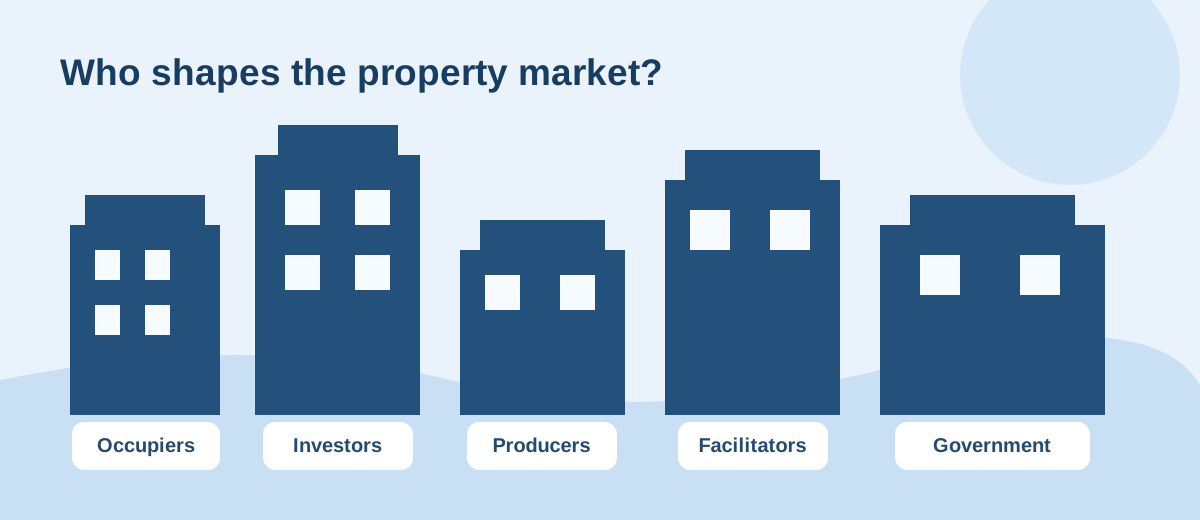
Original ExamDecoded illustration of the main real estate market participants.
Four broad groups participate in the real estate market: occupiers use property, investors hold it as an asset, producers develop it, and facilitators help transactions happen. Government agencies influence land use, housing, construction, financing, taxation and estate agency practice. Their functions differ, so identify the agency from the task described in an exam question.
Course reference: Based on the supplied Real Centre Network Paper One course book, Unit 1.2, printed pp. 30–33 (edition updated 18 December 2020). This is an original learning explanation, not a reproduction. The older book contains historical organisational information; consult official agency sources for current responsibilities and rules.
What you will learn
- Distinguish occupiers, investors, producers and facilitators.
- Explain how government controls can affect property demand, supply and transactions.
- Match relevant Singapore government agencies to their property-related functions.
1. The four groups of market players
| Player | Role | Singapore example |
|---|---|---|
| Occupiers | Own or rent property for their own use. | A family living in an HDB flat; a business leasing an office. |
| Investors | Hold property with an investment objective. | An owner buying a unit to earn rent or seek capital appreciation. |
| Producers | Add or renew supply through development and redevelopment. | A developer building apartments or a construction company delivering a project. |
| Facilitators | Support property purchases, sales and leases. | Banks, estate agents and lawyers. |
2. Why governments intervene
Property markets affect housing access, land use, the financial system and the built environment. Government intervention can influence the demand for property, the supply of property and the conditions under which transactions take place.
| Type of intervention | Illustrative mechanism | Possible market effect |
|---|---|---|
| Housing policy | Public housing provision and eligibility conditions. | Shapes who can access particular housing segments. |
| Tax and transaction measures | Stamp duties and other transaction-related measures. | Changes the cost of buying or disposing of property. |
| Financing controls | Rules affecting housing loans. | Influences buyers’ purchasing capacity. |
| Planning and land supply | Land-use plans, development controls and release of land. | Influences what can be built and future supply. |
| Industry regulation | Licensing and conduct requirements for estate agency work. | Sets standards for transaction intermediaries. |
These are conceptual examples, not a statement of current rates, thresholds or eligibility. A policy can have different effects across submarkets and time periods.
3. Singapore agencies and what they do
The course identifies the Ministry of National Development (MND) and a range of agencies relevant to property. Focus on each agency’s principal function rather than memorising acronyms in isolation.
| Agency | Full name | Property-related function |
|---|---|---|
| MND | Ministry of National Development | Oversees national development and land-use policy, public housing and the built environment. |
| BCA | Building and Construction Authority | Built environment, building standards, safety and construction-related matters. |
| CPF Board | Central Provident Fund Board | CPF savings and their permitted use for housing. |
| CEA | Council for Estate Agencies | Licensing estate agents, registering salespersons and regulating estate agency practice. |
| HDB | Housing & Development Board | Public housing development and administration of HDB housing matters. |
| IRAS | Inland Revenue Authority of Singapore | Administers taxes relevant to property, including stamp duty and property tax. |
| JTC | JTC Corporation | Industrial infrastructure and industrial property development. |
| LTA | Land Transport Authority | Land transport infrastructure and systems that influence accessibility. |
| MAS | Monetary Authority of Singapore | Central bank and financial-sector regulator; financing measures affect property borrowing. |
| NEA | National Environment Agency | Environmental public-health matters relevant to the built environment. |
| PDPC | Personal Data Protection Commission | Administers and enforces personal data protection requirements. |
| SLA | Singapore Land Authority | State land management, land registration and survey functions. |
| URA | Urban Redevelopment Authority | National land-use planning and development control. |
The 2020 notes also refer to AVA in their historical list of statutory boards. Do not treat that list as a current organisational chart. Agency responsibilities and reporting structures may change.
4. Apply it to a property transaction
The buyer is an occupier if purchasing for own use. HDB handles public-housing requirements; CPF Board is relevant if CPF savings are used; IRAS handles applicable stamp duty; a bank may facilitate financing.
A developer is a producer. JTC is associated with industrial infrastructure, URA with land-use planning and BCA with the built environment. Specific approvals depend on the project.
Quick revision
- Occupiers use; investors hold; producers build; facilitators support transactions.
- Intervention may affect demand, supply, finance, transaction costs or industry standards.
- CEA regulates estate agents and salespersons; URA plans land use; SLA handles land registration; IRAS administers taxes.
- HDB concerns public housing; JTC concerns industrial infrastructure; BCA concerns the built environment.
- Read the question’s scenario carefully before choosing the agency or market-player category.
Check your understanding
Eight original RES-style practice questions. Select one answer for each question, then check your results.
Sources and currency
Primary learning reference: supplied Real Centre Network Paper One course book, Unit 1.2 (printed pp. 30–33; updated 18 December 2020). For current policies and responsibilities, consult CEA, MND, URA, SLA, HDB and the other relevant official agency websites. Always use the syllabus applicable to your examination sitting.