2.1 Law of contract
A valid agreement needs identifiable parties, property and price, plus the legal elements of a contract.
A valid agreement needs identifiable parties, property and price, plus the legal elements of a contract. The parties must agree to the same terms; distinguish an invitation to treat from a definite offer.
What you will learn
- Offer and acceptance
- Consideration and form
- Capacity and legality
- Terms
- Vitiating factors
- Discharge and remedies
Core concepts at a glance
| Concept | Explanation |
|---|---|
| Offer and acceptance | The parties must agree to the same terms; distinguish an invitation to treat from a definite offer. |
| Consideration and form | A bargain generally involves consideration; some land transactions require prescribed written form or a deed. |
| Capacity and legality | Parties must have legal capacity and the object of the agreement must be lawful. |
| Terms | A condition and a warranty can carry different consequences when breached. |
| Vitiating factors | Misrepresentation, mistake, duress and undue influence can affect consent and enforceability. |
| Discharge and remedies | Performance, agreement, breach and frustration may end obligations; remedies depend on the facts. |
1. Offer and acceptance
The parties must agree to the same terms; distinguish an invitation to treat from a definite offer.
2. Consideration and form
A bargain generally involves consideration; some land transactions require prescribed written form or a deed.
3. Capacity and legality
Parties must have legal capacity and the object of the agreement must be lawful.
4. Terms
A condition and a warranty can carry different consequences when breached.
5. Vitiating factors
Misrepresentation, mistake, duress and undue influence can affect consent and enforceability.
6. Discharge and remedies
Performance, agreement, breach and frustration may end obligations; remedies depend on the facts.
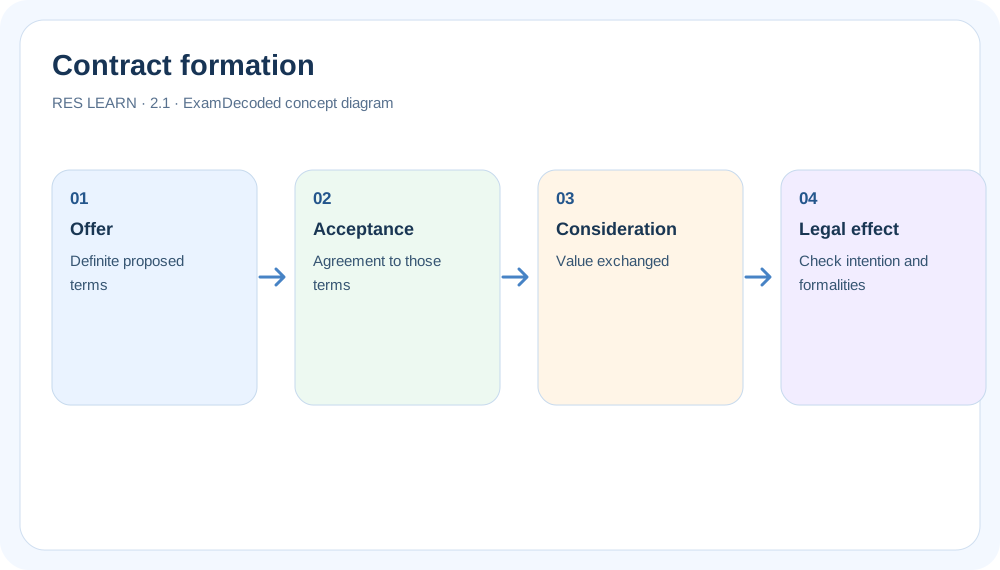
Visual guide: Contract formation
A topic-specific diagram to help you connect the concepts, rather than memorise isolated keywords.
How to read this diagram
- Offer: Definite proposed terms.
- Acceptance: Agreement to those terms.
- Consideration: Value exchanged.
- Legal effect: Check intention and formalities.
Apply it to a Singapore property scenario
An owner signs an OTP but the buyer does not exercise it within its stipulated validity period.
How to approach it: Identify the option terms and the legal effect of exercise or expiry; do not assume an unexercised OTP is a completed sale.
A signed document always creates an enforceable property sale.
Remember: Form, parties, terms, capacity and other requirements still matter.
Quick revision
- Offer and acceptance: The parties must agree to the same terms; distinguish an invitation to treat from a definite offer.
- Consideration and form: A bargain generally involves consideration; some land transactions require prescribed written form or a deed.
- Capacity and legality: Parties must have legal capacity and the object of the agreement must be lawful.
- Terms: A condition and a warranty can carry different consequences when breached.
- Vitiating factors: Misrepresentation, mistake, duress and undue influence can affect consent and enforceability.
- Discharge and remedies: Performance, agreement, breach and frustration may end obligations; remedies depend on the facts.
Practice MCQs
Choose one answer per question, check your score and review the explanations.
Official resources
For current Singapore legislation and agency guidance, refer to Singapore Statutes Online, CEA. Check the requirements applicable to your examination sitting.