2.2 Law of agency
Agency is a legal relationship in which an agent acts on behalf of a principal within the scope of authority.
Agency is a legal relationship in which an agent acts on behalf of a principal within the scope of authority. Agency may arise by express agreement, implication or other recognised legal mechanisms.
What you will learn
- Creation of agency
- Authority
- Fiduciary duties
- Care and disclosure
- Rights and remedies
- Termination
Core concepts at a glance
| Concept | Explanation |
|---|---|
| Creation of agency | Agency may arise by express agreement, implication or other recognised legal mechanisms. |
| Authority | Distinguish actual authority from apparent or ostensible authority. |
| Fiduciary duties | An agent must act loyally, avoid undisclosed conflicts and account for benefits received in the agency. |
| Care and disclosure | An agent must exercise reasonable care and communicate material information to the principal. |
| Rights and remedies | Remuneration and indemnity depend on the appointment and applicable law. |
| Termination | Agency may end by agreement, expiry, completion or other legally recognised events. |
1. Creation of agency
Agency may arise by express agreement, implication or other recognised legal mechanisms.
2. Authority
Distinguish actual authority from apparent or ostensible authority.
3. Fiduciary duties
An agent must act loyally, avoid undisclosed conflicts and account for benefits received in the agency.
4. Care and disclosure
An agent must exercise reasonable care and communicate material information to the principal.
5. Rights and remedies
Remuneration and indemnity depend on the appointment and applicable law.
6. Termination
Agency may end by agreement, expiry, completion or other legally recognised events.
Visual guide: Agency relationship
A topic-specific diagram to help you connect the concepts, rather than memorise isolated keywords.
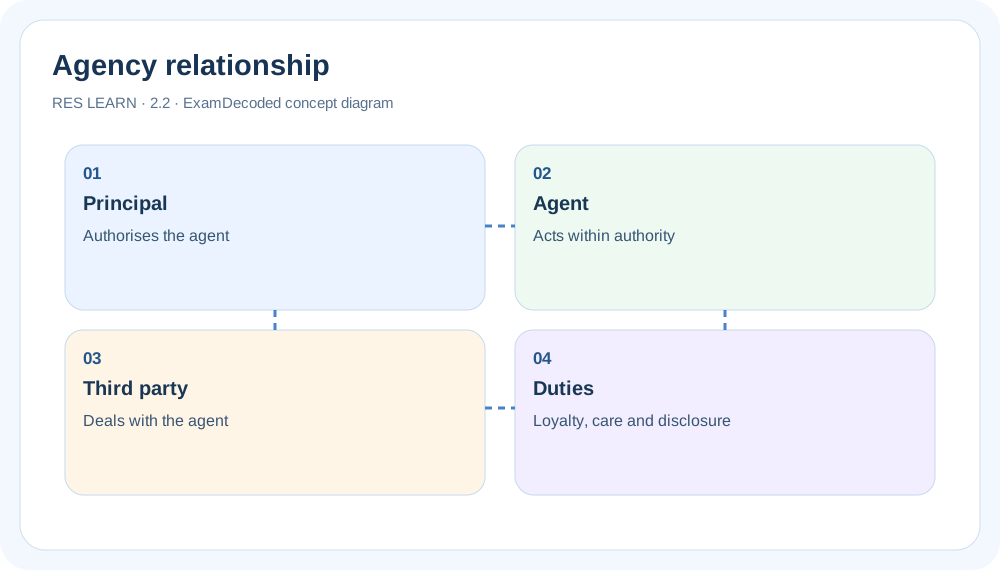
How to read this diagram
- Principal: Authorises the agent.
- Agent: Acts within authority.
- Third party: Deals with the agent.
- Duties: Loyalty, care and disclosure.
Apply it to a Singapore property scenario
A salesperson receives an offer from a buyer but does not inform the seller.
How to approach it: Consider the agent’s duty to communicate offers and act in the principal’s interest.
An agent can bind a principal to any transaction merely by saying they are an agent.
Remember: The nature and limits of authority matter.
Quick revision
- Creation of agency: Agency may arise by express agreement, implication or other recognised legal mechanisms.
- Authority: Distinguish actual authority from apparent or ostensible authority.
- Fiduciary duties: An agent must act loyally, avoid undisclosed conflicts and account for benefits received in the agency.
- Care and disclosure: An agent must exercise reasonable care and communicate material information to the principal.
- Rights and remedies: Remuneration and indemnity depend on the appointment and applicable law.
- Termination: Agency may end by agreement, expiry, completion or other legally recognised events.
Practice MCQs
Choose one answer per question, check your score and review the explanations.
Official resources
For current Singapore legislation and agency guidance, refer to Singapore Statutes Online, CEA. Check the requirements applicable to your examination sitting.