2.3 Landlord and tenant law
A tenancy grants an interest in land; a licence generally grants permission without an estate in land.
A tenancy grants an interest in land; a licence generally grants permission without an estate in land. Exclusive possession and the substance of the arrangement matter more than its label alone.
What you will learn
- Lease versus licence
- Types of tenancy
- Express and implied terms
- Landlord and tenant duties
- Ending a tenancy
- Transfer of tenancy interests
Core concepts at a glance
| Concept | Explanation |
|---|---|
| Lease versus licence | Exclusive possession and the substance of the arrangement matter more than its label alone. |
| Types of tenancy | Distinguish fixed-term, periodic, tenancy at will and tenancy at sufferance. |
| Express and implied terms | Rent, duration, repair, use, deposits and other obligations can be set out in the tenancy agreement. |
| Landlord and tenant duties | Understand possession, quiet enjoyment, payment and care of premises. |
| Ending a tenancy | Expiry, valid notice, surrender, forfeiture and other routes have different conditions. |
| Transfer of tenancy interests | Assignment, subletting and novation are different arrangements; check consent and contractual terms. |
1. Lease versus licence
Exclusive possession and the substance of the arrangement matter more than its label alone.
2. Types of tenancy
Distinguish fixed-term, periodic, tenancy at will and tenancy at sufferance.
3. Express and implied terms
Rent, duration, repair, use, deposits and other obligations can be set out in the tenancy agreement.
4. Landlord and tenant duties
Understand possession, quiet enjoyment, payment and care of premises.
5. Ending a tenancy
Expiry, valid notice, surrender, forfeiture and other routes have different conditions.
6. Transfer of tenancy interests
Assignment, subletting and novation are different arrangements; check consent and contractual terms.
Visual guide: Lease or licence?
A topic-specific diagram to help you connect the concepts, rather than memorise isolated keywords.
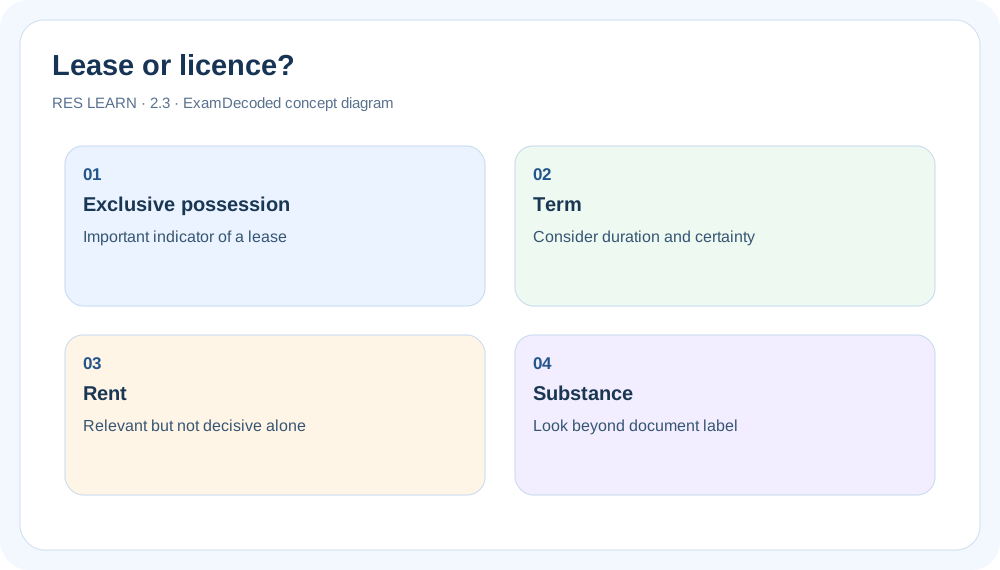
How to read this diagram
- Exclusive possession: Important indicator of a lease.
- Term: Consider duration and certainty.
- Rent: Relevant but not decisive alone.
- Substance: Look beyond document label.
Apply it to a Singapore property scenario
A tenant gives a third party use of one bedroom while remaining the tenant.
How to approach it: Consider subletting and any required landlord or regulatory approval.
Calling an agreement a licence always prevents it from being a lease.
Remember: Courts examine substance, not only the heading.
Quick revision
- Lease versus licence: Exclusive possession and the substance of the arrangement matter more than its label alone.
- Types of tenancy: Distinguish fixed-term, periodic, tenancy at will and tenancy at sufferance.
- Express and implied terms: Rent, duration, repair, use, deposits and other obligations can be set out in the tenancy agreement.
- Landlord and tenant duties: Understand possession, quiet enjoyment, payment and care of premises.
- Ending a tenancy: Expiry, valid notice, surrender, forfeiture and other routes have different conditions.
- Transfer of tenancy interests: Assignment, subletting and novation are different arrangements; check consent and contractual terms.
Practice MCQs
Choose one answer per question, check your score and review the explanations.
Official resources
For current Singapore legislation and agency guidance, refer to Singapore Statutes Online, CEA. Check the requirements applicable to your examination sitting.