2.4 Negligence
Negligence concerns a failure to meet a legally required standard of care that causes recoverable harm.
Negligence concerns a failure to meet a legally required standard of care that causes recoverable harm. Ask whether the defendant owed the claimant a duty in the circumstances.
What you will learn
- Duty of care
- Breach
- Causation
- Remoteness and damage
- Negligent misstatement
- Remedies
Core concepts at a glance
| Concept | Explanation |
|---|---|
| Duty of care | Ask whether the defendant owed the claimant a duty in the circumstances. |
| Breach | Compare conduct against the applicable standard of reasonable care. |
| Causation | The claimant must connect the breach to the alleged loss. |
| Remoteness and damage | Not every loss is legally recoverable. |
| Negligent misstatement | Careless factual statements can raise separate questions of reliance and duty. |
| Remedies | Damages aim to address legally proven loss, subject to applicable limits and defences. |
1. Duty of care
Ask whether the defendant owed the claimant a duty in the circumstances.
2. Breach
Compare conduct against the applicable standard of reasonable care.
3. Causation
The claimant must connect the breach to the alleged loss.
4. Remoteness and damage
Not every loss is legally recoverable.
5. Negligent misstatement
Careless factual statements can raise separate questions of reliance and duty.
6. Remedies
Damages aim to address legally proven loss, subject to applicable limits and defences.
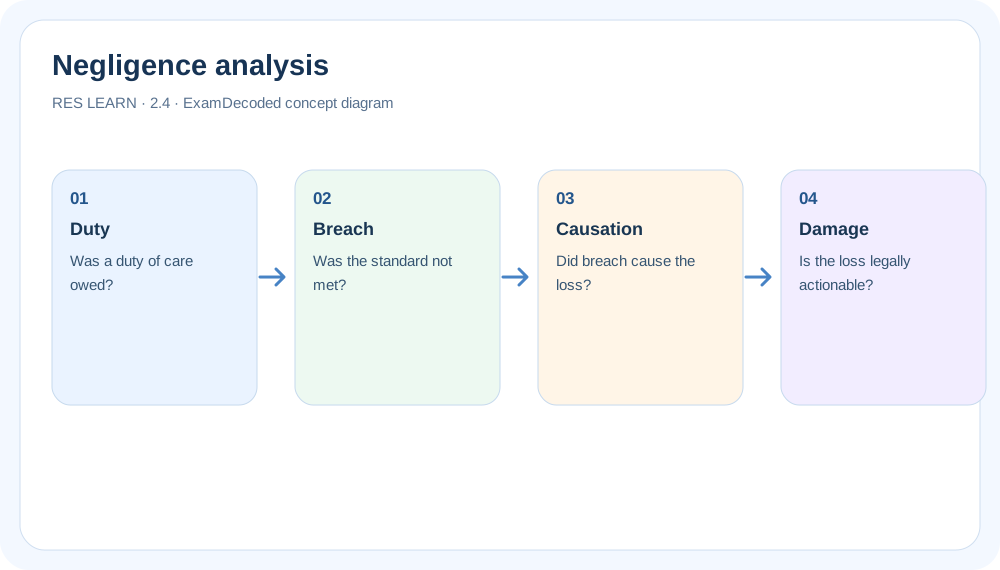
Visual guide: Negligence analysis
A topic-specific diagram to help you connect the concepts, rather than memorise isolated keywords.
How to read this diagram
- Duty: Was a duty of care owed?.
- Breach: Was the standard not met?.
- Causation: Did breach cause the loss?.
- Damage: Is the loss legally actionable?.
Apply it to a Singapore property scenario
A salesperson gives an unchecked factual assurance about a property and a client relies on it.
How to approach it: Identify the representation, duty, reliance and resulting loss; do not assume every inaccurate statement establishes negligence.
An error automatically proves negligence.
Remember: Duty, breach, causation and damage must be examined.
Quick revision
- Duty of care: Ask whether the defendant owed the claimant a duty in the circumstances.
- Breach: Compare conduct against the applicable standard of reasonable care.
- Causation: The claimant must connect the breach to the alleged loss.
- Remoteness and damage: Not every loss is legally recoverable.
- Negligent misstatement: Careless factual statements can raise separate questions of reliance and duty.
- Remedies: Damages aim to address legally proven loss, subject to applicable limits and defences.
Practice MCQs
Choose one answer per question, check your score and review the explanations.
Official resources
For current Singapore legislation and agency guidance, refer to Singapore Statutes Online, CEA. Check the requirements applicable to your examination sitting.