2.11 Co-ownership
Co-ownership describes two or more persons holding interests in the same property.
Co-ownership describes two or more persons holding interests in the same property. Joint tenants hold together and survivorship is a defining feature.
What you will learn
- Joint tenancy
- Tenancy in common
- Four unities
- Severance
- Rights and responsibilities
- Sale and succession
Core concepts at a glance
| Concept | Explanation |
|---|---|
| Joint tenancy | Joint tenants hold together and survivorship is a defining feature. |
| Tenancy in common | Co-owners hold undivided shares which can pass through their estates. |
| Four unities | Time, title, interest and possession are associated with joint tenancy. |
| Severance | A joint tenancy may be severed through legally recognised methods. |
| Rights and responsibilities | Co-owners may have rights to possession and obligations arising from their ownership. |
| Sale and succession | Check the title and ownership mode before advising on disposal or inheritance. |
1. Joint tenancy
Joint tenants hold together and survivorship is a defining feature.
2. Tenancy in common
Co-owners hold undivided shares which can pass through their estates.
3. Four unities
Time, title, interest and possession are associated with joint tenancy.
4. Severance
A joint tenancy may be severed through legally recognised methods.
5. Rights and responsibilities
Co-owners may have rights to possession and obligations arising from their ownership.
6. Sale and succession
Check the title and ownership mode before advising on disposal or inheritance.
Visual guide: Two forms of co-ownership
A topic-specific diagram to help you connect the concepts, rather than memorise isolated keywords.
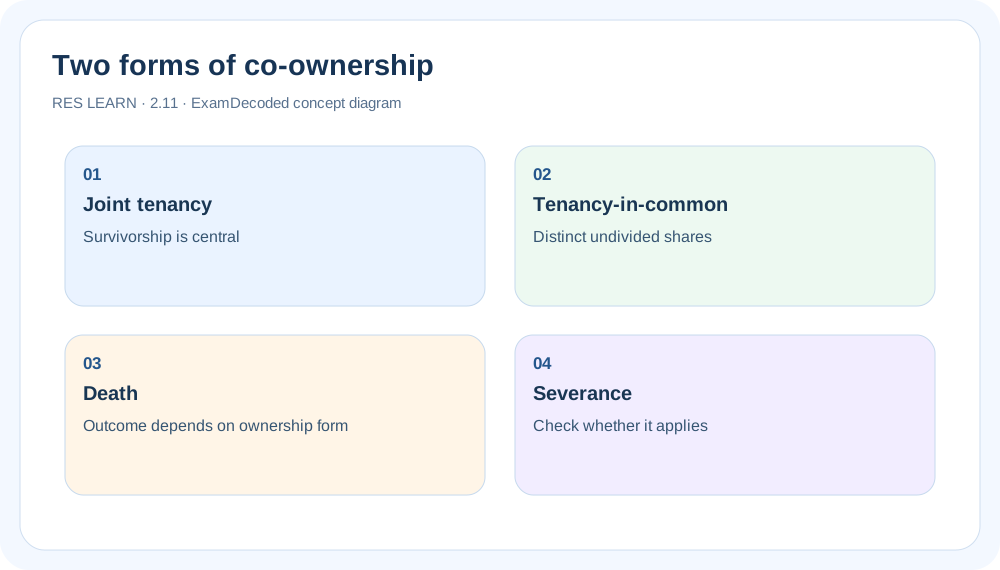
How to read this diagram
- Joint tenancy: Survivorship is central.
- Tenancy-in-common: Distinct undivided shares.
- Death: Outcome depends on ownership form.
- Severance: Check whether it applies.
Apply it to a Singapore property scenario
Two siblings own a property as tenants in common, one dies.
How to approach it: The deceased’s share generally forms part of the estate rather than passing by survivorship.
All co-owners automatically inherit each other’s share.
Remember: Survivorship depends on the form of co-ownership.
Quick revision
- Joint tenancy: Joint tenants hold together and survivorship is a defining feature.
- Tenancy in common: Co-owners hold undivided shares which can pass through their estates.
- Four unities: Time, title, interest and possession are associated with joint tenancy.
- Severance: A joint tenancy may be severed through legally recognised methods.
- Rights and responsibilities: Co-owners may have rights to possession and obligations arising from their ownership.
- Sale and succession: Check the title and ownership mode before advising on disposal or inheritance.
Practice MCQs
Choose one answer per question, check your score and review the explanations.
Official resources
For current Singapore legislation and agency guidance, refer to Singapore Statutes Online, CEA. Check the requirements applicable to your examination sitting.