2.10 Future interests
A future interest is a proprietary interest whose possession or enjoyment is deferred.
A future interest is a proprietary interest whose possession or enjoyment is deferred. Ownership of an interest need not mean immediate possession.
What you will learn
- Present versus future enjoyment
- Reversion
- Remainder
- Contingent interests
- Transaction analysis
Core concepts at a glance
| Concept | Explanation |
|---|---|
| Present versus future enjoyment | Ownership of an interest need not mean immediate possession. |
| Reversion | An interest may return to the grantor after a prior estate ends. |
| Remainder | An interest may pass to another person after a prior estate ends. |
| Contingent interests | An interest may depend on an event or condition. |
| Transaction analysis | Identify who holds the current estate and who may enjoy it later. |
1. Present versus future enjoyment
Ownership of an interest need not mean immediate possession.
2. Reversion
An interest may return to the grantor after a prior estate ends.
3. Remainder
An interest may pass to another person after a prior estate ends.
4. Contingent interests
An interest may depend on an event or condition.
5. Transaction analysis
Identify who holds the current estate and who may enjoy it later.
Visual guide: Present and future interests
A topic-specific diagram to help you connect the concepts, rather than memorise isolated keywords.
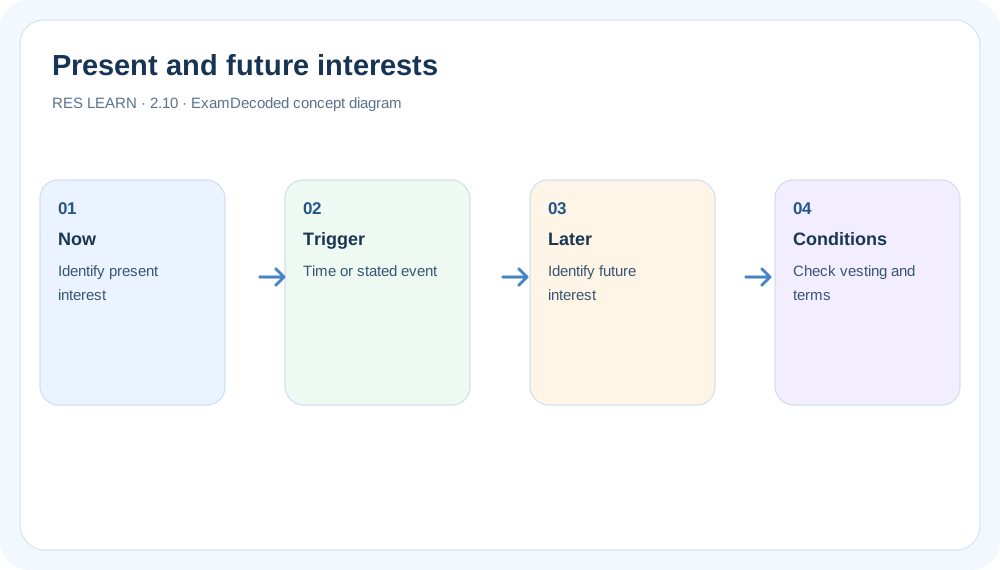
How to read this diagram
- Now: Identify present interest.
- Trigger: Time or stated event.
- Later: Identify future interest.
- Conditions: Check vesting and terms.
Apply it to a Singapore property scenario
A person is granted occupation for life, with the property to pass to another after death.
How to approach it: Distinguish the present life interest from the future interest.
A future interest is necessarily a mere hope without legal significance.
Remember: Some future interests are recognised proprietary interests.
Quick revision
- Present versus future enjoyment: Ownership of an interest need not mean immediate possession.
- Reversion: An interest may return to the grantor after a prior estate ends.
- Remainder: An interest may pass to another person after a prior estate ends.
- Contingent interests: An interest may depend on an event or condition.
- Transaction analysis: Identify who holds the current estate and who may enjoy it later.
Practice MCQs
Choose one answer per question, check your score and review the explanations.
Official resources
For current Singapore legislation and agency guidance, refer to Singapore Statutes Online, CEA. Check the requirements applicable to your examination sitting.