2.9 Succession
Succession deals with how property interests pass after death.
Succession deals with how property interests pass after death. A valid will governs testate succession; statutory rules apply to intestacy.
What you will learn
- Testate and intestate
- Executor and administrator
- Grant of probate or administration
- Estate debts and distribution
- Property holding structure
- Applicable law
Core concepts at a glance
| Concept | Explanation |
|---|---|
| Testate and intestate | A valid will governs testate succession; statutory rules apply to intestacy. |
| Executor and administrator | Personal representatives administer the estate. |
| Grant of probate or administration | The relevant court grant establishes authority for estate administration. |
| Estate debts and distribution | Liabilities and administration generally precede distribution to beneficiaries. |
| Property holding structure | Joint tenancy and tenancy in common may lead to different outcomes on death. |
| Applicable law | Distribution may depend on the deceased’s circumstances and governing law. |
1. Testate and intestate
A valid will governs testate succession; statutory rules apply to intestacy.
2. Executor and administrator
Personal representatives administer the estate.
3. Grant of probate or administration
The relevant court grant establishes authority for estate administration.
4. Estate debts and distribution
Liabilities and administration generally precede distribution to beneficiaries.
5. Property holding structure
Joint tenancy and tenancy in common may lead to different outcomes on death.
6. Applicable law
Distribution may depend on the deceased’s circumstances and governing law.
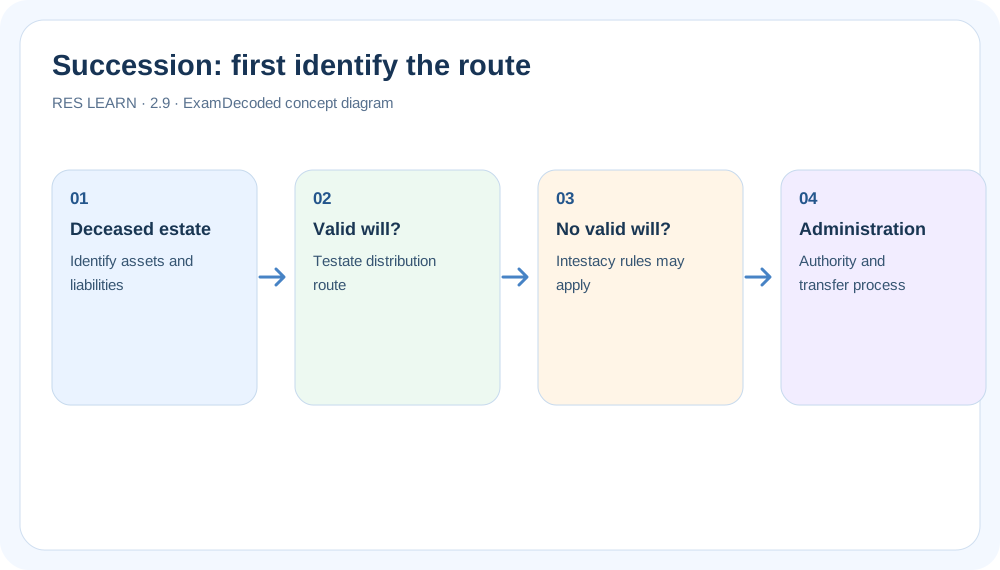
Visual guide: Succession: first identify the route
A topic-specific diagram to help you connect the concepts, rather than memorise isolated keywords.
How to read this diagram
- Deceased estate: Identify assets and liabilities.
- Valid will?: Testate distribution route.
- No valid will?: Intestacy rules may apply.
- Administration: Authority and transfer process.
Apply it to a Singapore property scenario
A co-owner dies and the family asks who receives the deceased’s share.
How to approach it: First establish the form of co-ownership and whether survivorship applies.
A will always overrides a joint tenancy’s survivorship.
Remember: The ownership structure matters.
Quick revision
- Testate and intestate: A valid will governs testate succession; statutory rules apply to intestacy.
- Executor and administrator: Personal representatives administer the estate.
- Grant of probate or administration: The relevant court grant establishes authority for estate administration.
- Estate debts and distribution: Liabilities and administration generally precede distribution to beneficiaries.
- Property holding structure: Joint tenancy and tenancy in common may lead to different outcomes on death.
- Applicable law: Distribution may depend on the deceased’s circumstances and governing law.
Practice MCQs
Choose one answer per question, check your score and review the explanations.
Official resources
For current Singapore legislation and agency guidance, refer to Singapore Statutes Online, CEA. Check the requirements applicable to your examination sitting.