3.10 Marketing of special properties
Conservation status can restrict alterations and redevelopment; check URA conservation requirements before marketing development potential.
Conservation status can restrict alterations and redevelopment; check URA conservation requirements before marketing development potential. Shophouses may combine heritage, commercial and residential characteristics, so title, use, conservation and tenancy issues all matter.
What you will learn
- Conservation properties
- Shophouses
- Hotels and leisure property
- Car parks and specialised assets
- Planning and licensing
- Specialist due diligence
Core concepts at a glance
| Concept | What to know |
|---|---|
| Conservation properties | Conservation status can restrict alterations and redevelopment; check URA conservation requirements before marketing development potential. |
| Shophouses | Shophouses may combine heritage, commercial and residential characteristics, so title, use, conservation and tenancy issues all matter. |
| Hotels and leisure property | Hotels and leisure assets are operational real estate; licences, management arrangements and business performance may be material. |
| Car parks and specialised assets | Specialised assets such as car parks require attention to approved use, access, operating rights and property-specific restrictions. |
| Planning and licensing | A property’s physical appearance does not prove that a particular use is authorised; verify planning and licensing status. |
| Specialist due diligence | Complex assets often require lawyers, valuers, planners, accountants or other specialists in addition to estate agency work. |
1. Conservation properties
Conservation status can restrict alterations and redevelopment; check URA conservation requirements before marketing development potential.
In the context of special property transactions, this concept must be applied to the facts of a specific transaction, not learned as a standalone definition. Special-use assets require attention to their specific title, statutory approvals, operational licences and market characteristics. Seek the relevant authority guidance before making eligibility or use claims.
Practical example: A prospective buyer wants to convert an institutional property into residential use. Planning approval cannot be assumed. The correct analysis identifies the relevant parties, documents, governing authority and timing before advising on next steps.
Exam distinction: A high selling price does not override planning, tenure or licensing restrictions. Explain the reason for your answer and state what evidence or approval would be needed to confirm it.
2. Shophouses
Shophouses may combine heritage, commercial and residential characteristics, so title, use, conservation and tenancy issues all matter.
In the context of special property transactions, this concept must be applied to the facts of a specific transaction, not learned as a standalone definition. Special-use assets require attention to their specific title, statutory approvals, operational licences and market characteristics. Seek the relevant authority guidance before making eligibility or use claims.
Practical example: A prospective buyer wants to convert an institutional property into residential use. Planning approval cannot be assumed. The correct analysis identifies the relevant parties, documents, governing authority and timing before advising on next steps.
Exam distinction: A high selling price does not override planning, tenure or licensing restrictions. Explain the reason for your answer and state what evidence or approval would be needed to confirm it.
3. Hotels and leisure property
Hotels and leisure assets are operational real estate; licences, management arrangements and business performance may be material.
In the context of special property transactions, this concept must be applied to the facts of a specific transaction, not learned as a standalone definition. Special-use assets require attention to their specific title, statutory approvals, operational licences and market characteristics. Seek the relevant authority guidance before making eligibility or use claims.
Practical example: A prospective buyer wants to convert an institutional property into residential use. Planning approval cannot be assumed. The correct analysis identifies the relevant parties, documents, governing authority and timing before advising on next steps.
Exam distinction: A high selling price does not override planning, tenure or licensing restrictions. Explain the reason for your answer and state what evidence or approval would be needed to confirm it.
4. Car parks and specialised assets
Specialised assets such as car parks require attention to approved use, access, operating rights and property-specific restrictions.
In the context of special property transactions, this concept must be applied to the facts of a specific transaction, not learned as a standalone definition. Special-use assets require attention to their specific title, statutory approvals, operational licences and market characteristics. Seek the relevant authority guidance before making eligibility or use claims.
Practical example: A prospective buyer wants to convert an institutional property into residential use. Planning approval cannot be assumed. The correct analysis identifies the relevant parties, documents, governing authority and timing before advising on next steps.
Exam distinction: A high selling price does not override planning, tenure or licensing restrictions. Explain the reason for your answer and state what evidence or approval would be needed to confirm it.
5. Planning and licensing
A property’s physical appearance does not prove that a particular use is authorised; verify planning and licensing status.
In the context of special property transactions, this concept must be applied to the facts of a specific transaction, not learned as a standalone definition. Special-use assets require attention to their specific title, statutory approvals, operational licences and market characteristics. Seek the relevant authority guidance before making eligibility or use claims.
Practical example: A prospective buyer wants to convert an institutional property into residential use. Planning approval cannot be assumed. The correct analysis identifies the relevant parties, documents, governing authority and timing before advising on next steps.
Exam distinction: A high selling price does not override planning, tenure or licensing restrictions. Explain the reason for your answer and state what evidence or approval would be needed to confirm it.
6. Specialist due diligence
Complex assets often require lawyers, valuers, planners, accountants or other specialists in addition to estate agency work.
In the context of special property transactions, this concept must be applied to the facts of a specific transaction, not learned as a standalone definition. Special-use assets require attention to their specific title, statutory approvals, operational licences and market characteristics. Seek the relevant authority guidance before making eligibility or use claims.
Practical example: A prospective buyer wants to convert an institutional property into residential use. Planning approval cannot be assumed. The correct analysis identifies the relevant parties, documents, governing authority and timing before advising on next steps.
Exam distinction: A high selling price does not override planning, tenure or licensing restrictions. Explain the reason for your answer and state what evidence or approval would be needed to confirm it.
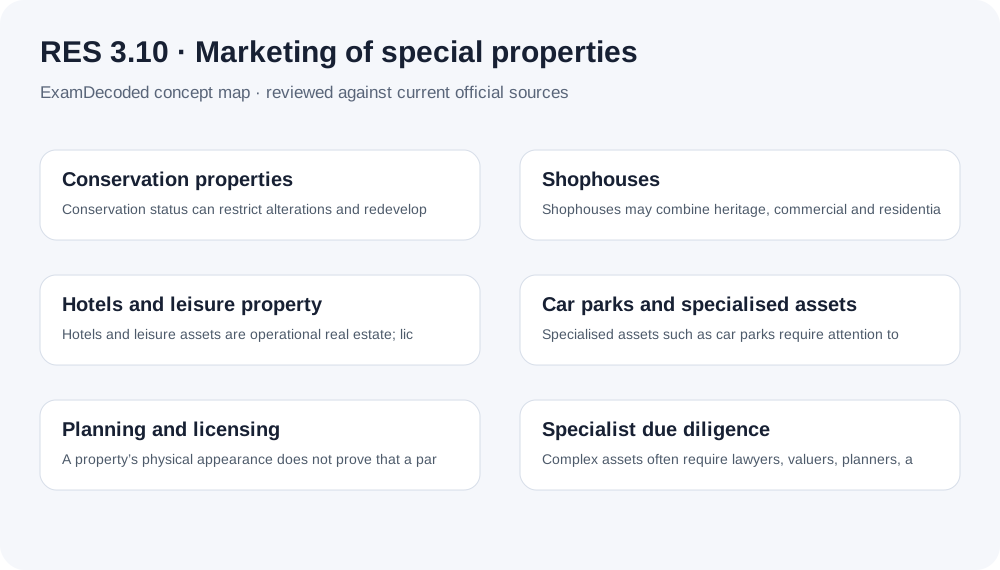
Visual guide: connect the concepts
Use this map to connect the main rules before attempting scenario questions.
Apply it to an exam scenario
Identify the property type, parties, transaction stage and the exact rule being tested. Then check whether the facts trigger an eligibility condition, disclosure duty, approval, tax, financing limit or professional obligation.
Applying an old rate or rule simply because it appeared in older course notes.
Remember: For policy-driven topics, the date of the transaction can change the answer.
Quick revision
- Conservation properties: Conservation status can restrict alterations and redevelopment; check URA conservation requirements before marketing development potential.
- Shophouses: Shophouses may combine heritage, commercial and residential characteristics, so title, use, conservation and tenancy issues all matter.
- Hotels and leisure property: Hotels and leisure assets are operational real estate; licences, management arrangements and business performance may be material.
- Car parks and specialised assets: Specialised assets such as car parks require attention to approved use, access, operating rights and property-specific restrictions.
- Planning and licensing: A property’s physical appearance does not prove that a particular use is authorised; verify planning and licensing status.
- Specialist due diligence: Complex assets often require lawyers, valuers, planners, accountants or other specialists in addition to estate agency work.
Practice MCQs
These questions test application rather than memorising a paragraph.
Official resources & currency
Reviewed: 7 October 2026. Key official references: Official source 1 · Official source 2. Because property rules change, re-check the relevant authority for your examination sitting and transaction date.