1.5 Estates in Land
Distinguish tenure, estate, freehold, leasehold and strata ownership.
The nature and duration of an interest in land. The broadest freehold estate described in the course. A leasehold interest for the term granted by the State.
What you will learn
- Tenure and estate
- Freehold forms in the course
- Leasehold and strata
1. Tenure and estate
| Concept | Explanation |
|---|---|
| Estate | The nature and duration of an interest in land. |
| Tenure | The terms on which land is held. |
| Freehold | An estate of indefinite duration, subject to applicable law. |
| Leasehold | An estate for a specified term. |
2. Freehold forms in the course
| Concept | Explanation |
|---|---|
| Fee simple | The broadest freehold estate described in the course. |
| Estate in perpetuity / statutory land grant | A distinct freehold form addressed in the course, with grant conditions. |
3. Leasehold and strata
| Concept | Explanation |
|---|---|
| State lease | A leasehold interest for the term granted by the State. |
| Remaining term | The unexpired portion of a lease; not the original lease duration. |
| Strata title | Separate title to a unit with associated rights in common property. |
Visual guide: Tenure and title are different questions
A topic-specific diagram to help you connect the concepts, rather than memorise isolated keywords.
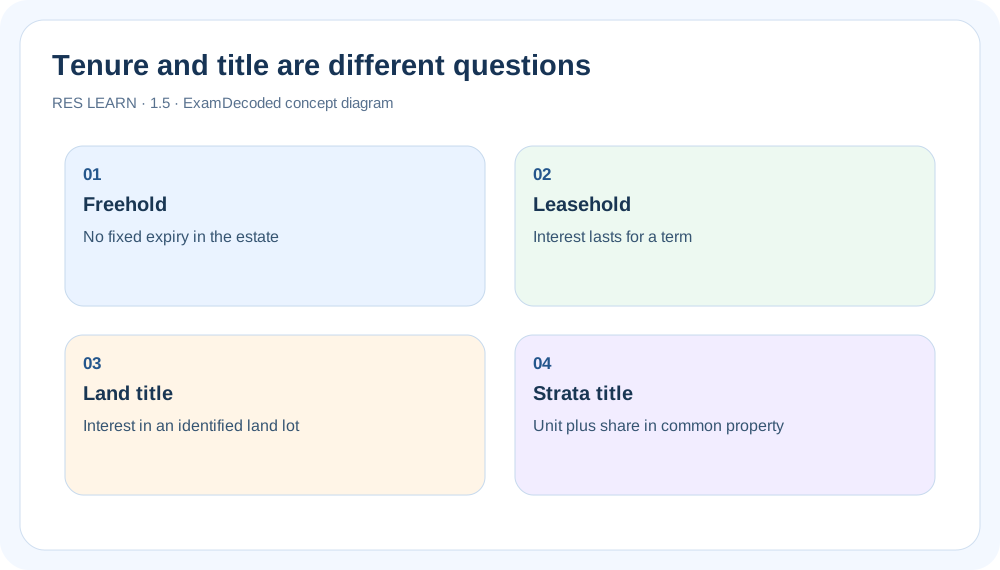
How to read this diagram
- Freehold: No fixed expiry in the estate.
- Leasehold: Interest lasts for a term.
- Land title: Interest in an identified land lot.
- Strata title: Unit plus share in common property.
Apply it to a Singapore property scenario
A 99-year lease is not renewed automatically when a property changes hands; the purchaser generally receives the remaining term.
Freehold does not mean the land is exempt from planning controls or compulsory acquisition.
Quick revision
- Estate: The nature and duration of an interest in land.
- Fee simple: The broadest freehold estate described in the course.
- State lease: A leasehold interest for the term granted by the State.
Practice MCQs
Choose one answer per question, then check your score and read the explanations.
When comparing properties, inspect the actual tenure and remaining lease rather than relying on a marketing description such as “long lease”.
An estate describes the duration and nature of a person’s interest in land. Freehold and leasehold interests are not interchangeable; a leasehold title expires according to its term unless lawfully extended.
Official resources
For current Singapore legislation and agency guidance, refer to Singapore Statutes Online, Singapore Land Authority. Check the requirements applicable to your examination sitting.